
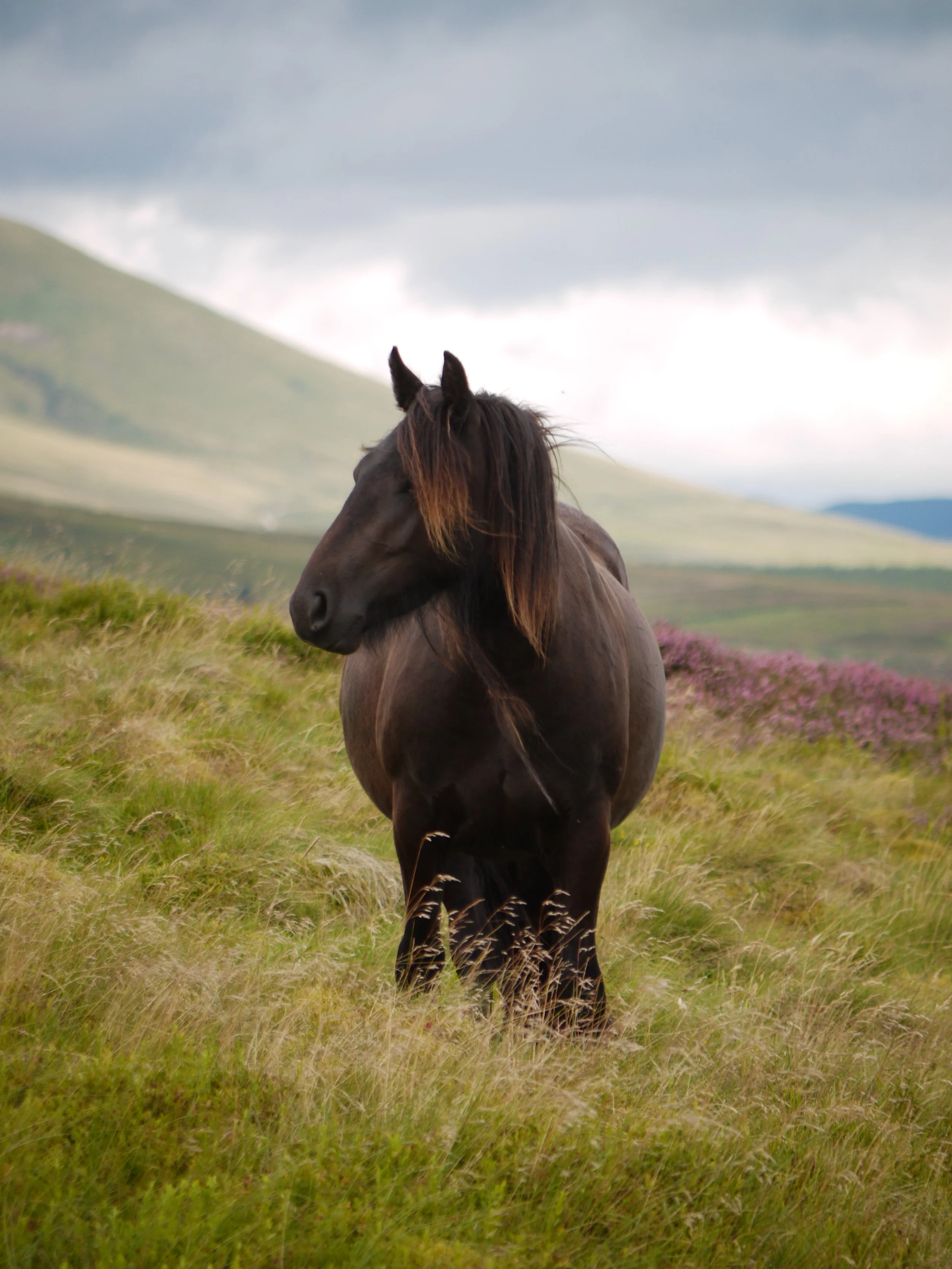
Fell Ponies are a rare native Pony Breed from Cumbia.
The Fell Ponies are versatile in nature and have a strong work ethic making them a valuable asset with breed characteristics being shaped by the upland fell environment of the Cumbrian mountains and moorland with the right to roam, with the hill breeders having grazing rights for ponies for centuries.
The Fell Pony herds have been allowed to graze over large expances of uncultivated common land with sheep mostly generally above the tree line and covering sometimes 2,300 hectares with the right to roam throughout the year.
Fel ponies eat vegetation consisting mainly of nutrient -poor coarse grasses mixed with indigenous plants such as heather, bilberry , gorse, moss and bracken in a landscape of sweeping grassy slopes, rocky outcrops and a mix of dry and boggy areas.
The Fell Ponies body is perfectly adapted to the challenging conditions of the fell's. It is the rough living conditions that give the breed their inherent hardiness and instinctive sense of how to adated. These are passed down through generations of ponies living on the fells. This environment keeps the genes of survival turned on without these genetic traits activated even for one generation they are starting to be turned off as the Fell pony and the fell landscape share a symbiotic relationship preserving the breed's natural traits.
The core of the breed is on the fell, breeders on the lowlands and in other countries will need to returen to the Cumbran hill-breeders often to keep bloodlines from the hill bred stock. This is crucial so that the core of the breed continues to reside on the fells.
The semi-wild herds live on the fells all year round except for a few weeks during the breeding season when brought down to the in-bye for the remaining mares to foal and to run with the stallion. The vegetation in the in-bye is richer in these fields to what the Fell pony is used to so if they stay too long they can quickly become overweight.
Reference to, Duty of the person responsible for animal welfare to ensure welfare:
(1) A person commits an offence if he does not take such steps as are reasonable in all the circumstances to ensure that the needs of an animal for which he is responsible are met to the extent required by good practice.
(2) For the purposes of this Act, an animal’s needs shall be taken to include— (a) its need for a suitable environment, (b) its need for a suitable diet, (c) its need to be able to exhibit normal behaviour patterns, (d) any need it has to be housed with, or apart from, other animals, and (e) its need to be protected from pain, suffering, injury and disease. (3) The circumstances to which it is relevant to have regard when applying subsection (1) include, in particular— (a) any lawful purpose for which the animal is kept, and (b) any lawful activity undertaken in relation to the animal.
(4) Nothing in this section applies to the destruction of an animal in an appropriate and humane way. Animal Welfare Act 2006.